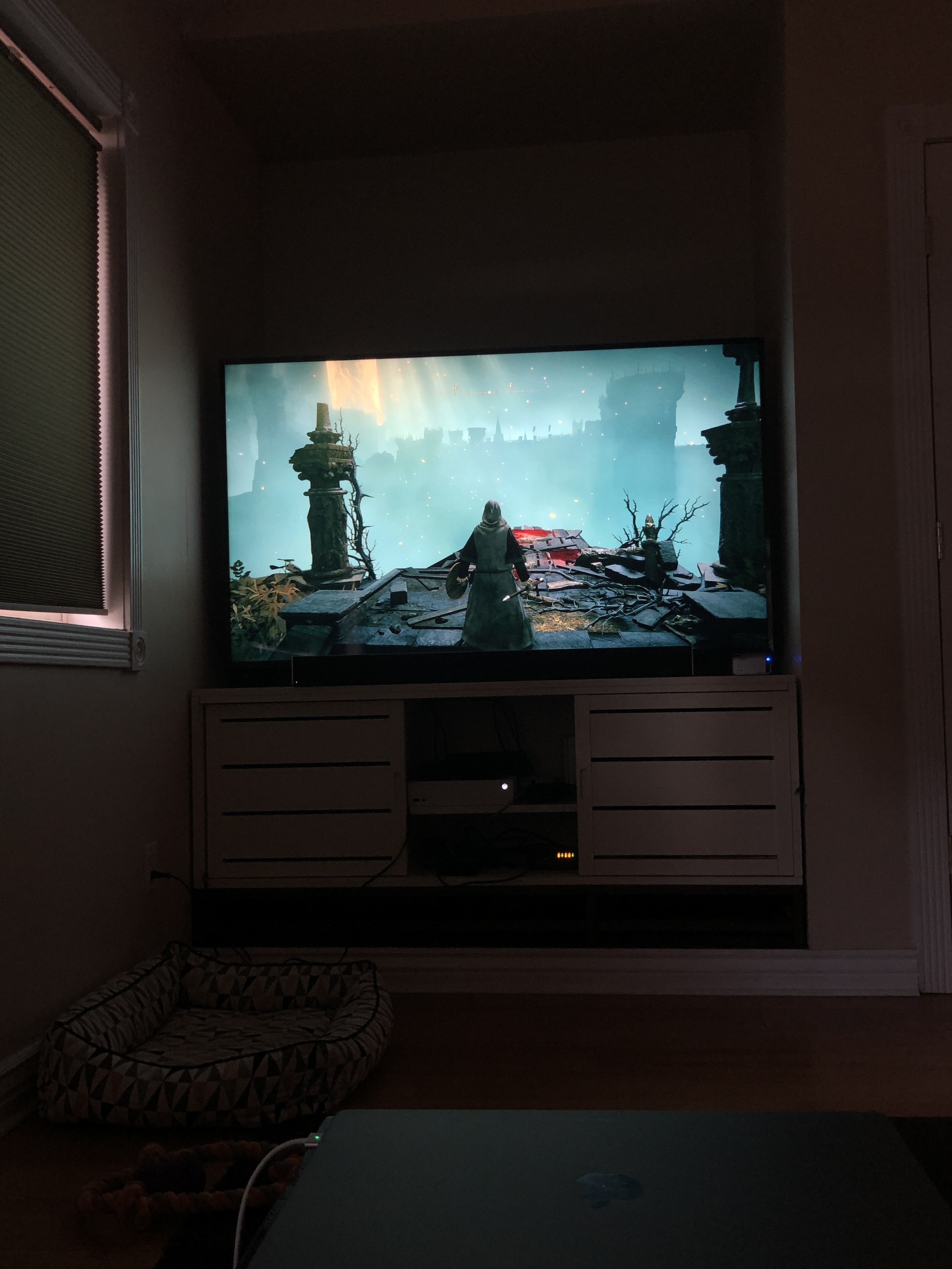
🎮 I got to spend a few hours this weekend laying siege to the new dungeon that was released in Destiny 2 on Friday. Today, my team and I finished it! It’s the first time I’ve been able to play new, hard content at release and without any prior knowledge of it – and to actually complete it! I’m really happy that I got to do it, and I really enjoyed the time with my team to figure it all out together and successfully make our way through it.
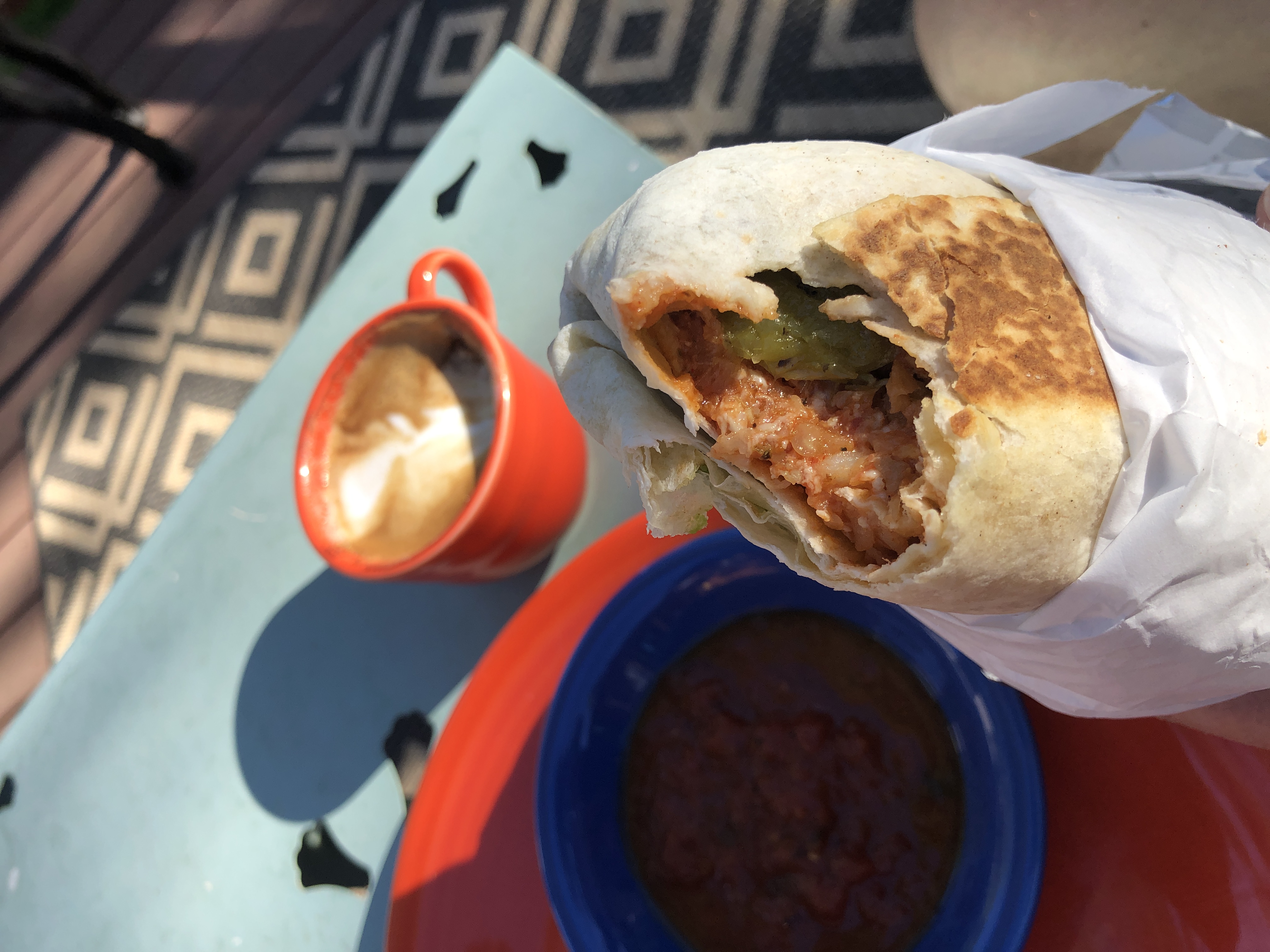
It’s Friday, my friends! I have had a great big workout (incl leg burners snuck in at the end by my trainer), procured a breakfast burrito, and have the day off to start a long weekend. Let’s go!
Having seen how easy it was to convert a couple of hobby projects to use {pins}, I’m now daydreaming about putting it at the center of an S3 data lake operation.
I successfully made some small changes in a Shiny app to use the {pins} package to separate out a support file and data definitions from the app bundle itself. This lets me revise supporting information without needing to republish the app. It’s pretty cool! I’m excited to use the package lots more.
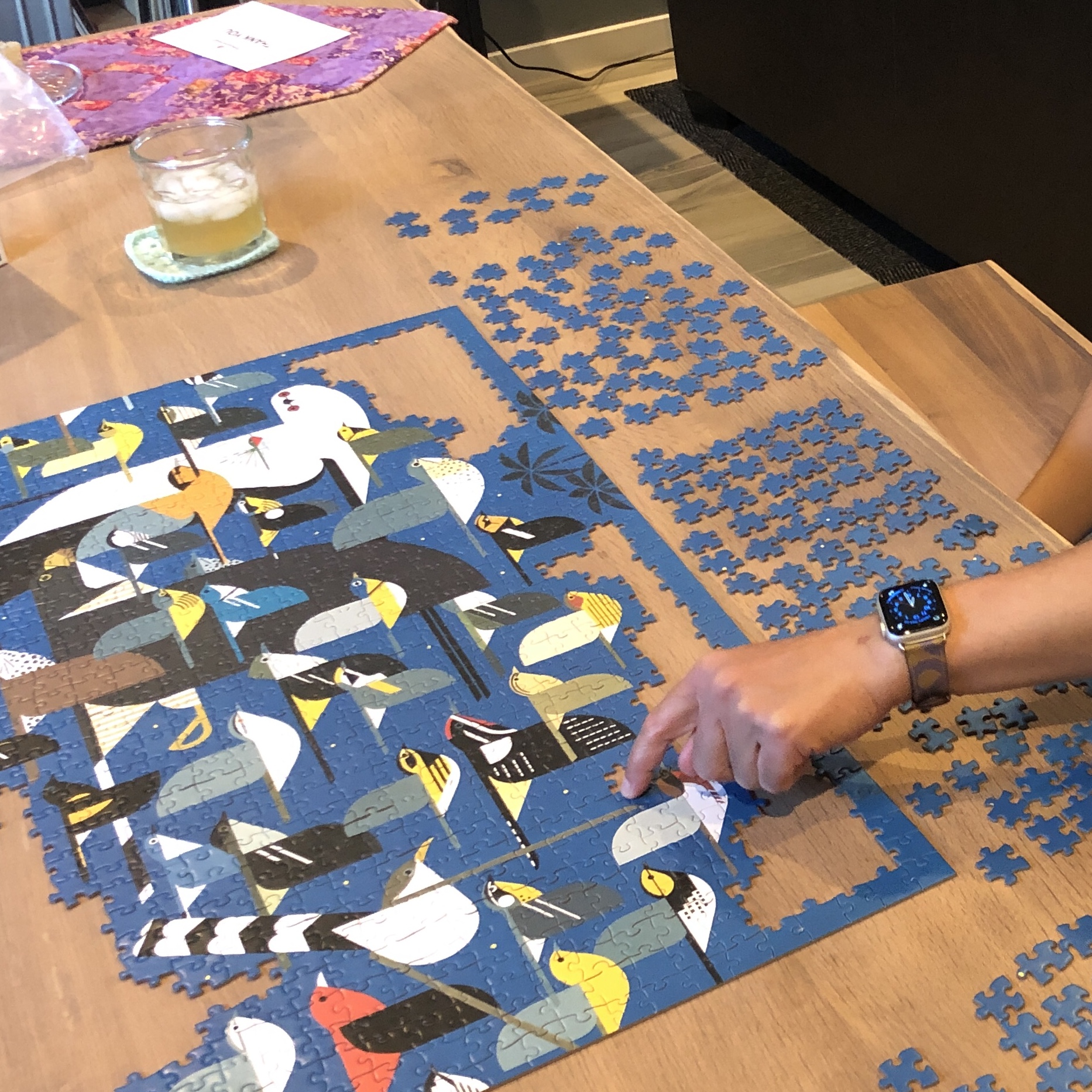
Having placed every puzzle piece with the slightest identifiable feature, we are left with a sea of blue, and we are positively laying siege to the remainder.

Pretty good coffee this morning.
Sharing a quick tip that I’ve found useful while building with Shiny, recently: It’s handy to be able to save off the current state of a data set for bringing over to a scratch file. I made the download link appear only when running in my local environment. This way I can easily snapshot my in process data set for experimenting with visualization in my scratch file.
In ui.R:
    if(interactive()) {
      downloadLink("downloadData", "💾️ Download data set")
    }
And in server.R:
    output$downloadData <- downloadHandler(
      filename = function() {
        paste("shiny-export_", Sys.Date(), ".csv", sep="")
      },
      content = function(file) {
        write.csv(globaldata$armor, file)
      }
    )
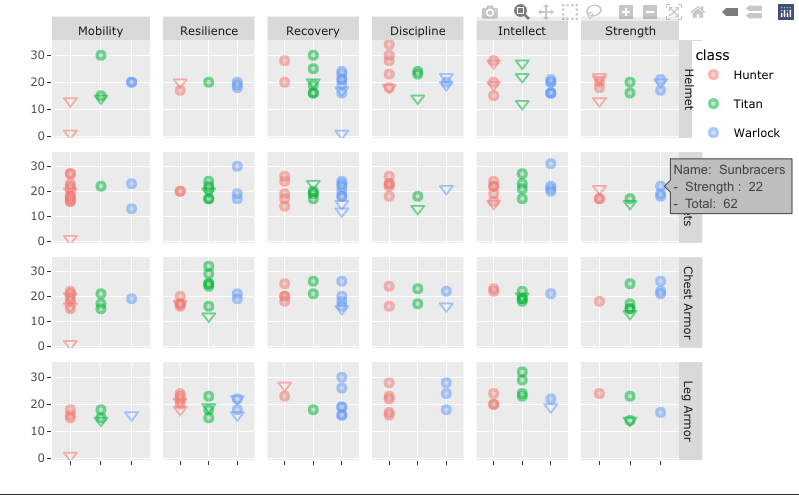
I had a good time this weekend coming up with a new way to visualize armor stat distribution in my Destiny 2 profiler tool. 🎮
Just learned of {httr2} (https://github.com/r-lib/httr2), a rewrite of R’s httr package, and am excited to try it out! The pipeable API looks like a nicely improved way to build complex requests.