Knee Deep in Nostalgia
This week was the twenty year anniversary of Doom. Ars Technica has a fun collection of Doom memories, and Wired has an interview with Chris Carmack that touches on the game’s design and technology decisions, and its long-lived effect on gaming.
I was in my senior year of high school when Doom was released, and I ran a BBS that experienced a lot of downtime while I shotgunned imps. For some reason, I was a keyboard-only player, and I recall being stunned at how quickly players using a mouse in a deathmatch (deathmatch!) could spin to take me down while I pursued them. As it happened, however, I didn’t play much multiplayer until going off to college the following fall with my shiny 386DX4 built by a friend who worked at a local computer store.
Aside: I spent a lot of time hanging out at Pro Computer. There’s a good story that involves my high-centering my mom and dad’s car in the parking lot by backing over a sizeable ledge that seems in hindsight to be awfully poorly placed. Somewhere somebody had an animated ANSI of the whole episode, including three friends helping rock the car back onto its wheels.
Also, This is where I tl;dr my own rant about how kids these days have it easy with their mostly reliable PC hardware. That custom DX4 was a speed demon in its day, but I was forever troubleshooting problems between its Sound Blaster and sketchy CD-ROM drive. I never did get that damn thing to play Myst.
I lived in a former frat house converted my year into a freshman men’s dorm. It wasn’t wired for Ethernet with the campus network at the time, but it was only about half full, which means it had a lot of unused phone lines that, as it happens, were nonetheless live. So, we had a reasonably high tech group of college freshmen slightly isolated by geography from the bulk of campus, with lots of high-spec hardware, 14.4kbps modems (I would upgrade to a 28.8 that winter), and an extra phone line for just about everybody.
So, yeah, we played a lot of deathmatch Doom that year.
One epic game sticks in my mind, ending with two of us, down to the last scraps of ammo and health after a furious series of frags, stalking one another for one final hit. It was the kind of finale that had housemates gathered around our CRTs in each of our rooms (also because it was time to go to dinner, come on guys, let’s do this). I had the rocket launcher and he had the plasma gun, and I rounded a corner just in time to find him — camping! — at the far end of a room. The slight travel time for both our weapons’ fire meant that we had enough time to watch, but not quite dodge effectively, as a rocket traversed one direction and plasma came the other way, for a devastating simul-frag. I recall seeing him drop, briefly mentally celebrating, and then going down myself, to hoots around me and down the hall. Brutal.
So thanks, Doom, for twenty years, you big gateway FPS you.
- The Fujifilm X100s a One Year on Review: “I love the X100s and after a year of shooting it still holds the same excitement it offered on day one. I can’t recommend it enough.”
- Blues Brothers mall car-chase recreated in Lego - Boing Boing: we gotta go see the Penguin.
- Film Crit Hulk Smash: ALCOHOL, WITHNAIL AND GARY KING [Lower Caps Bruce Banner Edition]
- Boing Boing Gift Guide 2013 - Boing Boing: there’s a lot of pretty cool stuff on this list.
- DMing for your toddler: my son has started wanting me to tell him stories instead of reading them, so I’ve been making up a couple of core stories and elaborating on them a little each night as he asks questions and reminds me of details I may have added and forgotten. Turning this into a shared, RPG-like story game sound like a lot of fun.
- ‘Racism’ of early colour photography explored in art exhibition : This is a fascinating story that should give some light to the week’s dust up over gender-neutral pronouns. Technologies are not neutral to race, gender and class.
[Love Actually celebrates a Christmas for the rest of us](http://www.avclub.com/article/love-actually-celebrates-a-christmas-for-the-rest-106269])
When I was in high school, I gave up on the idea of Christmas, bitter at my discovery that going through the motions doesn’t actually result in initiation into the dominant culture. Yet Christmas remained an unavoidable holiday, and I found it was best spent watching movies and ignoring one’s parents for as long as possible. That’s when Love Actually came into my life.
Every time it ends, I wish it wouldn’t. I want the music to keep playing. I want the stories to keep unfolding. I want to live inside the warm, loving, and occasionally tragic world of the film, where not everyone gets a happy ending. Love Actually is the only film that brings me Christmas spirit—a modern, urban kind of festivity, but one that makes my heart warm like no stories of Santa or nutcrackers really can.
This is a great reflective review of a movie that I like a lot. Sonia Saraiya captures something about the about the way the film is mostly about moods and a collective excitement and mostly-gentleness.
snow delay
A few inches of snow and very cold temps mean a two-hour delay for the start of school this morning, so I have some extra time to have coffee and hang out with my son this morning. He’s excitedly running through the living room in his snow boots, so I’m taking a few minutes to make note of a few things that have interested me lately.
Computing at Home and Computing at Work
Six-fifteen AM, coffee in hand, I’m watching the Mavericks download progress bar on my mid-2009 MacBook Pro, my home PC. I skipped Mountain Lion on this Mac, so I imagined as this process began that I’d have quite a bit to get used to. Coffee finished, I went for a nice run at the gym (morning temp here was 22º F and I’m not crazy) and came home to find the upgrade ready to install; clicked go and went out to breakfast; came home and logged in to my new Mavericks install. So far, so seamless!
I’m not really a Mac power user anymore. Time was, I had a finely tuned academic Mac productivity toolchain; contributed lots of code to TextMate bundles; knew the guts of my LaTeX configuration inside and out; was all up in GTD’s grill. But now that the Mac is my home-not-work machine, there’s actually not so much to catch up with when I upgrade, and there’s less to be had from the carefully crafted Mac Productivity Workflows I used to invest in. While I still do plenty of stuff at home, the volume of information I’m organizing and working with is just so substantially smaller than in the course of my Day Job, that the return, for example, on re-tooling my To-Do list system in Alfred is pretty low.
Much of this is attributable to mobile: The slick workflow for posting to this site is based in Editorial now, as opposed to the Mac desktop, and if I want a reminder of something (bills due), my iPhone works far better at that than my MacBook Pro simply because it’s always there, while I spend much less time on the actual computer than when I was a stay-at-home grad student. Meanwhile, BYOD at work has concentrated even more information and interaction on my iPhone than before — but unlike the home Mac desktop, it’s relatively hard to bring the sophistication of iOS (say, OmniFocus) into the tools I spend most of my time on during my day job.
Aside: So I started this post early on a weekend morning a few weeks ago, and so far Mavericks is just a very nice experience. I’ve read The Siracusa Review and it’s a good example of the detail that I love to read but may not actually need: Back in the day, tags would have been revelatory — TAGS! — but now, no project living on my home Mac is so big that I need them. I’m not sure how to feel about that.
This matters because I get a lot of reward from using tools that are interesting, effective, and sophisticated. Doing one’s work is about more than the end deliverable, right? The process matters, too, and if I like doing the work then the product is better for it (not to mention I’ll do it again). Now, in my work environment there’s only so much room to explore process because enterprise environments aren’t as flexible as start ups or academia (see recent episodes of ATP on enterprise software for much more; I have a few draft thoughts about this, too perhaps forthcoming). But in that space I find a great deal of energy and frequently recharge my productivity batteries.
By way of example, I have for a while used emacs’ org-mode for note taking, but have felt it getting cumbersome as a place to do actual writing in, so I retooled a little bit, picked up MikTeX and a Tufte-style LaTeX template and started drafting ideas related to some emerging projects. I can write in markdown and build a beautiful document, and it’s fun so I enjoy the thinking more.
$ pandoc -o work-thing.pdf --latex-engine=xelatex --template=template-tufte-handout.tex work-thing.md
Just feels good. Now, sharing that work (at least in a format that my co-workers can revise instead of simply admire) requires further transformation, but that’s okay; I’m getting what I need out of it at the right point in the process. To be clear, this work is rewarding all by itself because I have interesting problems and great colleagues; but there’s always room for a nicer toolkit of ways in which to work.
More photography: Using the Fuji X100S and VSCO
Since buying the VSCO Film Pack 04 I’ve been post processing a lot of photos, and I am starting to get a feel for what I like and what seems to work well with the kinds of photos I enjoy shooting — and liking the results enough that I sprung for Film Pack 02 when it was on sale recently.
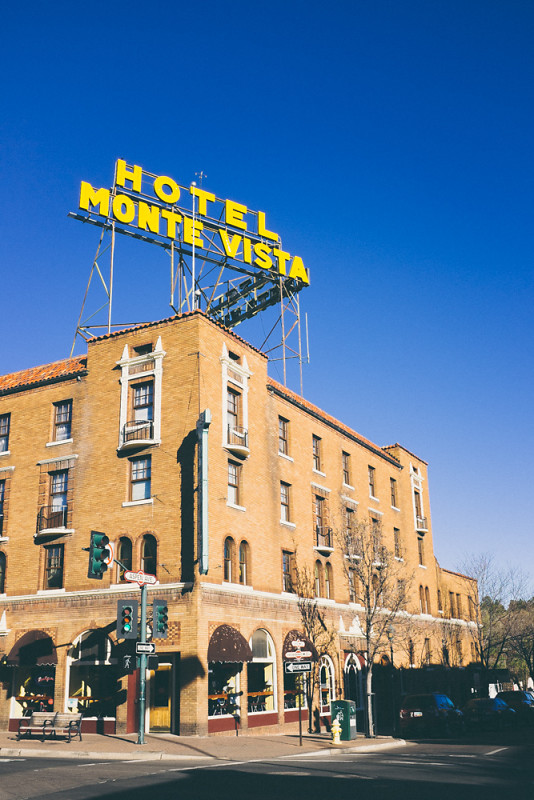
Working on some photo books over the weekend, I revisited some photos I made with my previous “big” camera, a now almost seven years-old DSLR that was my starting point for all of this hobbyist interest in photography. I have a shelf full of lenses and am deeply fond of many of the photos that came from them over the years, and proud of some of them, too. I picked up that camera for the first time in a while this weekend, organizing and cleaning up some bookshelves — It’s heavy. I had forgotten. I am so used to the weight and heft of the X100s, the feel of the shutter, and that big optical viewfinder, I think it would be hard to go back. I love its output and I love to use it.
A good tool encourages its user to explore its capabilities, to learn to be most effective or creative or (day I say) productive. This camera rewards my efforts to get better. I don’t have illusions about being a good photographer because I have a nice camera, but having a camera that makes even my hobby shooting feel like something that approaches a craft gives me a great incentive to learn and improve — and it’s a real kick.
[Everpix was great. This is how it died.](http://www.theverge.com/2013/11/5/5039216/everpix-life-and-death-inside-the-worlds-best-photo-startup])
I won’t get to try Everpix after all. It’s too bad — it really appears to hit that niche for finding and using photos, as opposed to just dropping them in a, well, box. The Everpix team sold their technology to enable an orderly close of business (which I think shows a lot of respect for their customers), so I hope it resurfaces somewhere.
Khoi Vinh also has some thoughts. Perhaps emblematic of the problems that Everpix faced is that he describes Everpix primarily in terms of a backup service, when in fact the core of the experience the team designed was by all accounts much more than than.
[Drive Nacho Drive](http://www.drivenachodrive.com)
Brad and Sheena van Orden are a local pair who have been on the road for nearly two years in a custom VW camper van (I grew up vacationing in the back of one of those all over the Western US and get a little dreamy when I see one for sale). From Flagstaff, they’ve made it through South America, shipped the van (Nacho) to southeast Asia to continue through Thailand and Cambodia, and are now headed to India and the Himalayas. Their travelogue is full of fantastic photography and stories, and they have a book, too. Follow along!
It's autumn!
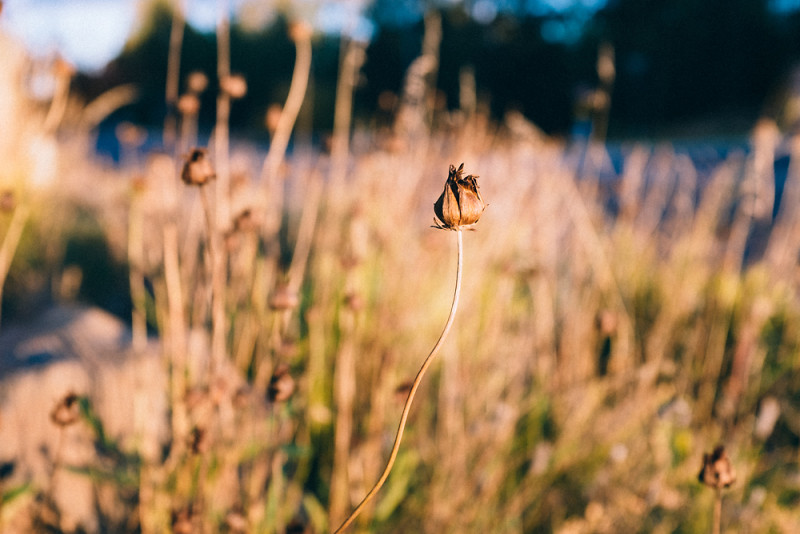
Making the leap to Mavericks on my home MacBook Pro prompted me to think some about the dramatically different computing environments between my home and work. But that’s still a drafty post, so here are some autumn timey photos that I like, including the seasonally-required autumn leaves photos.

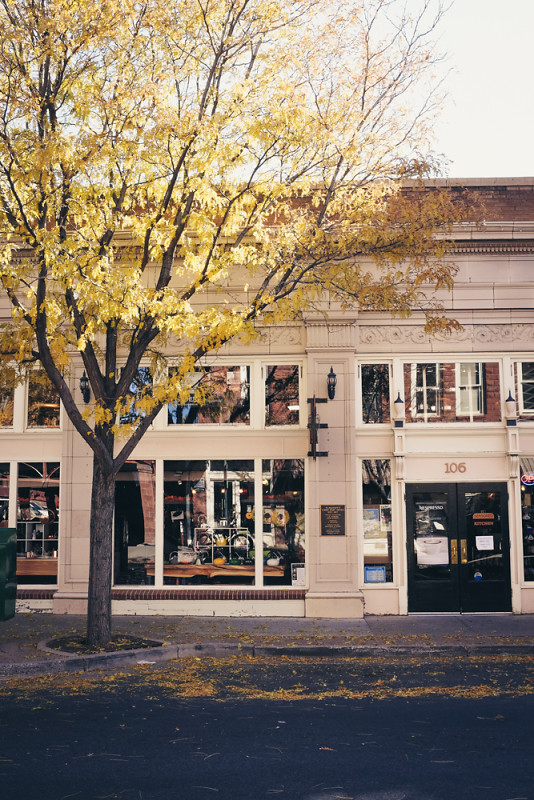
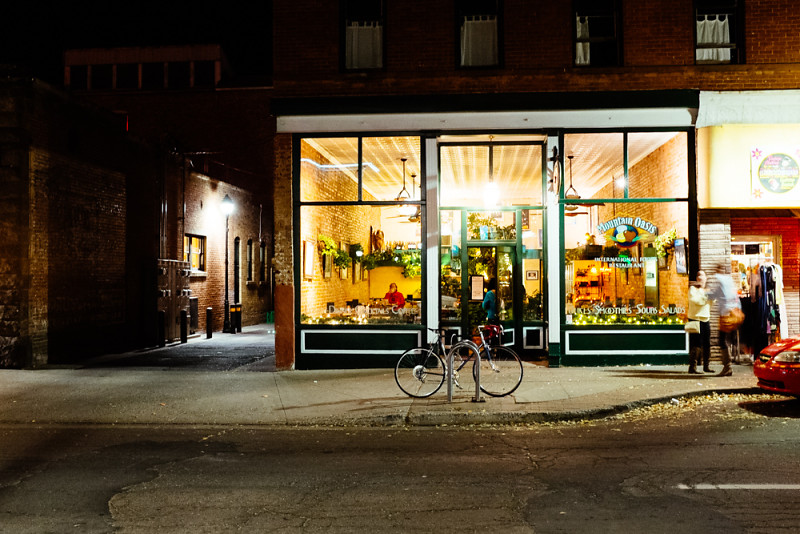
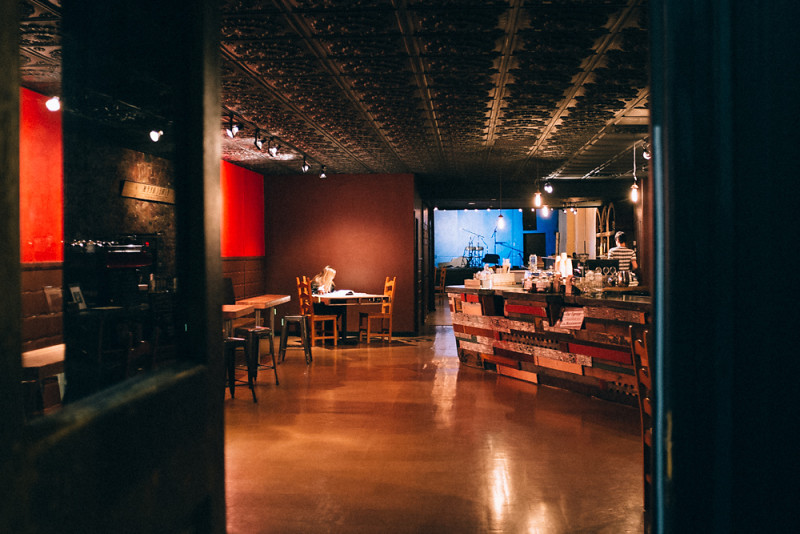
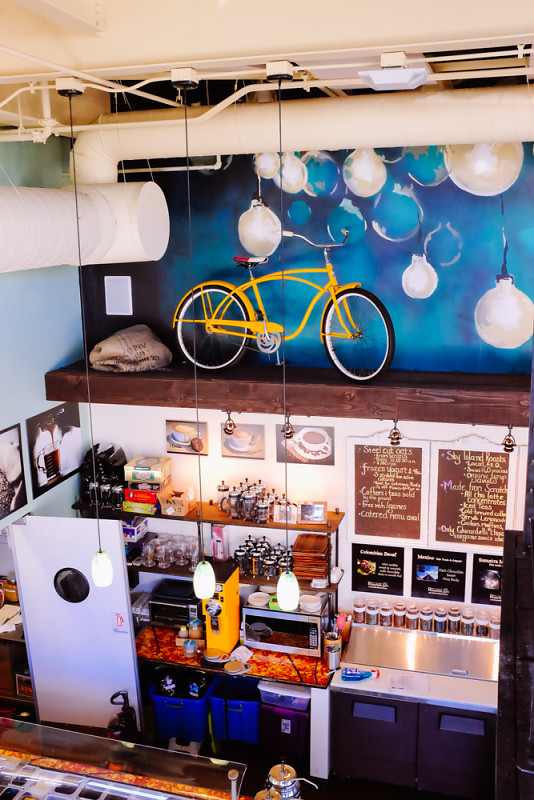
We also have a good new coffee shop in town that I quite enjoy: